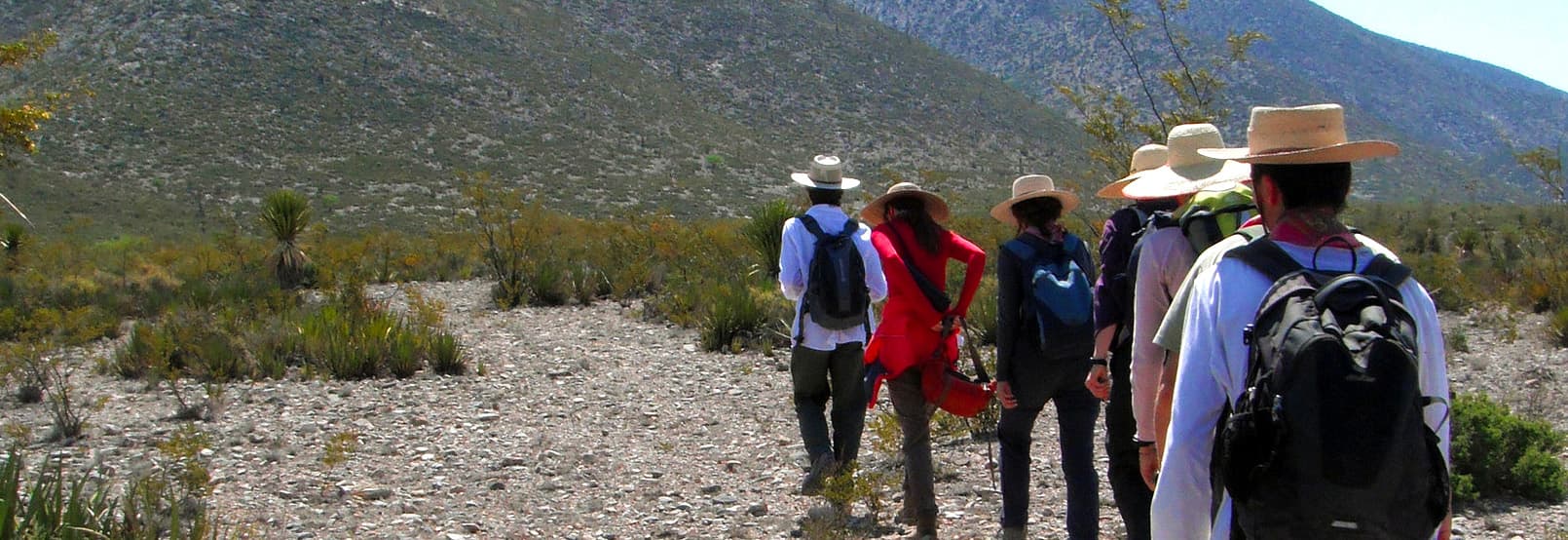
Columbia men's hiking trail shoes
Trail-ready grip for Real de Catorce, Huasteca Potosina, and Sierra de San Miguelito.
$1,200–2,500 MXN
View on Mercado LibreAffiliate link


Quick Answer
Best time: visit San Luis Potosí city October–April for dry, clear 21–30°C days; for Huasteca Potosina waterfalls, go November–March for turquoise water. Expect the hottest sun in May, the heaviest rain in September, and near-freezing dawns December–February.
San Luis Potosí's weather secret is altitude: at roughly 1,860 m, the capital gets 300+ days of high-desert sun, mild afternoons in every month and nights that always cool down. Here is the month-by-month climate table (SMN 1991–2020 normals), the best time to visit for each kind of trip — and the crucial catch: the Huasteca Potosina, three hours east, runs on a completely different climate.
Short answer: visit the city October–April (dry, clear, 21–30°C days); do the Huasteca waterfalls November–March (turquoise water, before the late-dry-season lows); expect the hottest sun in May, the heaviest rain in September, and near-freezing dawns December–February.
SMN/CONAGUA climate normals 1991–2020. City figures are shown as ranges across the two SLP city stations (24069 and 24111, ~1,870 m); rain days = days with measurable rain.
| Month | High (°C) | Low (°C) | Rain (mm) | Rain days | In short |
|---|---|---|---|---|---|
| January | 21–22 | 4–7 | 13–14 | 4–8 | Coldest month — sunny afternoons, near-freezing dawns |
| February | 23–25 | 5–8 | 11–12 | 3–5 | Dry and warming; nights still cold |
| March | 26–27 | 7–10 | 8–9 | 3–4 | Driest stretch of the year; real spring warmth |
| April | 29–30 | 10–13 | 11 | 3–4 | Hot, dry and clear — Huasteca rivers at their lowest |
| May | 29–31 | 12–14 | 37–44 | 7–9 | Hottest, sunniest month; first storms at the end |
| June | 27–29 | 13–15 | 59 | 9–11 | Rainy season arrives — afternoon and evening storms |
| July | 26–28 | 12–14 | 62–76 | 10 | Warm days, regular evening rain, green hills |
| August | 26–28 | 12–14 | 48–55 | 10 | FENAPO month: warm, with evening showers |
| September | 24–26 | 12–14 | 75–82 | 13 | Wettest, cloudiest month of the year |
| October | 24–25 | 9–12 | 31–33 | 8–11 | Rains fade; the long clear season begins |
| November | 22–24 | 6–9 | 12–15 | 4–8 | Dry, mild days, chilly nights; turquoise water returns to the Huasteca |
| December | 21–23 | 4–7 | 7–8 | 2–8 | Driest month; crisp, bright winter days |
Annual totals: 386–404 mm of rain over 81–95 rain days. Per WeatherSpark, the clearer part of the year starts around late October and lasts about 7.7 months, May is the sunniest month, September the most overcast — and muggy humidity is essentially zero year-round at this altitude.
The city's semi-arid highland climate means a 15–17°C swing between afternoon and dawn is normal. A 22°C sunny January afternoon can follow a 4°C morning — and SMN station records show sub-zero minima in every month from October through March (down to −8°C in January and −8.5°C in December at station 24111). Whatever the month: sunscreen for midday, a real layer for after dark.
This is the mistake that ruins packing lists: checking the capital's forecast for a Huasteca trip. Ciudad Valles — the waterfall hub, 87 m above sea level — is hot, humid lowland. It gets three times the rain of the capital (1,208 mm vs ~400 mm a year), average May highs of 36°C with recorded extremes near 48°C, and summer nights that stay above 22°C. Meanwhile the capital never averages above 31°C in any month and always cools down at night.
SMN/CONAGUA normals 1991–2020, station 24012 (87 m).
| Month | High (°C) | Low (°C) | Rain (mm) |
|---|---|---|---|
| January | 25.1 | 12.4 | 23.6 |
| February | 28.0 | 14.0 | 17.4 |
| March | 31.3 | 16.9 | 32.1 |
| April | 34.2 | 19.6 | 40.4 |
| May | 36.0 | 22.2 | 95.8 |
| June | 35.7 | 23.0 | 184.7 |
| July | 34.2 | 22.5 | 235.4 |
| August | 35.0 | 22.5 | 158.6 |
| September | 32.9 | 21.7 | 243.6 |
| October | 31.1 | 19.3 | 113.9 |
| November | 28.2 | 16.1 | 41.4 |
| December | 25.9 | 13.4 | 21.5 |
Practical translation: June–October the Huasteca rivers run high and brown with sediment; roughly November through April they turn the famous turquoise. Full logistics in our 3/5/7-day Huasteca itinerary.
The dry season is the city at its best: near-daily sun, 21–27°C afternoons for walking the centro histórico, and only 2–8 rain days a month. November–February needs layers for cold nights; March–April adds real warmth without the rains. May works too if you like it hot (29–31°C) — it is the sunniest month, with storms only arriving at the very end. Ideas for the visit: our visitor guide and the 7 verified day trips.
November to March is the sweet spot: turquoise water, rafting season on the Tampaón, bearable lowland heat. Two honest caveats. First, June–October the rivers run high and sediment-brown — spectacular volume, no postcard color, and some activities pause. Second, the late dry season is now a real risk: Tamul waterfall was reported nearly dry in early 2024 and again in April–May 2026 (upstream irrigation extraction plus heat, per La Jornada), so April–May visitors should temper waterfall expectations. Plan it properly with the Huasteca itinerary.
FENAPO 2026 runs August 7–30. August is mid-rainy-season but kind: 26–28°C days, 12–14°C nights and ~10 rain days in the month, usually short evening showers rather than washouts. Fair strategy: light rain layer for the evening, something warm for the post-palenque walk to the car — at 1,860 m the night air bites even in summer. Lineup, tickets and logistics: our FENAPO 2026 hub.
Xantolo weather is transition weather: in Ciudad Valles, October still averages 31°C highs with 114 mm of rain, while November drops to 28°C and 41 mm — so the celebration usually lands right as the rains switch off and before the turquoise water fully returns. Warm days, mild nights (16–19°C), and a real chance of a shower in the last October days. If you base in the capital those same nights run 6–12°C — pack for both.
For the city, October to April: the dry, clear season, with mild sunny days (21–30°C highs) and almost no rain. For turquoise water in the Huasteca Potosina, November to March is the sweet spot — rivers have cleared after the rains but have not yet hit the late-dry-season lows that have left Tamul waterfall nearly dry in April–May (documented in 2024 and again in 2026). For FENAPO, the state fair (August 7–30, 2026), come in August and expect warm days with evening showers.
In the city, roughly late May through early October, with June–September concentrating most of the ~386–404 mm annual total and September the wettest month (75–82 mm). The Huasteca lowland gets about three times more rain: Ciudad Valles records 1,208 mm a year, with 235 mm in July and 244 mm in September alone (SMN climate normals 1991–2020).
The city sits at roughly 1,860 m, so winter is about cold nights, not cold days: December–January afternoons still reach 21–23°C, but overnight lows average 4–7°C, and SMN station records show sub-zero minima in every month from October through March. Pack real layers for mornings and evenings.
No — they are two different climates in one state. The capital is semi-arid highland at ~1,860 m: ~400 mm of rain a year, dry air and cool nights year-round. Ciudad Valles, the Huasteca hub, sits at 87 m: hot and humid, 36°C average May highs, 1,208 mm of annual rain, and nights that rarely cool below 22°C in summer. Check both forecasts if your trip covers both.
Warm and manageable: August in the city averages 26–28°C highs and 12–14°C lows, with around 10 rain days in the month (48–55 mm total) — typically brief evening showers. Bring a light rain layer and something warm for late-night palenque exits; at this altitude the temperature drops fast after sunset.
Temperature, rainfall and rain-day figures: SMN/CONAGUA climate normals 1991–2020 for stations 24069 San Luis Potosí (DGE), 24111 San Luis Potosí (SMN) and 24012 Ciudad Valles, retrieved July 2026; city values are shown as ranges across the two urban stations. Sunshine/cloud-cover seasonality: WeatherSpark (modeled data). Turquoise-water vs sediment season: Huasteca-Potosina.com and regional guides. Tamul low-water episodes: La Jornada (Feb 2024 and May 6, 2026) and Potosinoticias (Apr 27, 2026). Climate classification and altitude: Wikipedia (BSh semi-arid; 1,864 m) and SMN station metadata (1,870–1,903 m). Normals are 30-year averages — any given year can vary.
Picked your month? Now pick your plans.
See what's on this week — or get the weekly agenda free.
Subscribe to San Luis Way WeeklyGear and home items our community recommends for life and adventure in SLP.
Trail-ready grip for Real de Catorce, Huasteca Potosina, and Sierra de San Miguelito.
$1,200–2,500 MXN
View on Mercado LibreAffiliate link

Grip wet stone at Media Luna, Puente de Dios, and Huasteca waterfalls without slipping.
$400–800 MXN
View on Mercado LibreAffiliate link

SLP is dry and dusty. A HEPA purifier helps expats avoid respiratory issues in the first months.
$1,500–3,500 MXN
View on Mercado LibreAffiliate link
Get practical tips to navigate the city, weekly events, and useful local info delivered to your inbox.
Join our community. No spam, ever.
Free events, new restaurants, updated guides — every week.
Get weekly updates on new places, events, and expat tips delivered to your inbox.
We respect your privacy. Unsubscribe at any time.