Columbia men's hiking trail shoes
Trail-ready grip for Real de Catorce, Huasteca Potosina, and Sierra de San Miguelito.
$1,200–2,500 MXN
View on Mercado LibreAffiliate link



Quick Answer
Las Pozas is Edward James’s surrealist jungle garden above Xilitla, built from 1962 to 1984 after a 1962 frost killed his orchids; entry in 2026 is MX$180 plus a mandatory guide. Reserve a timed slot online, pay at the box office, and visit Wed–Mon 9 AM–6 PM.
In this guide
Facts verified July 2026 · Sources at the end · Part of our Huasteca Potosina itinerary
Deep in the cloud forest of eastern San Luis Potosí, a British aristocrat spent two decades and over five million dollars building a surrealist dream out of concrete. Las Pozas — staircases that climb into nothing, flowers taller than houses, a palace meant for no one — is the strangest, most photogenic place in Mexico you can still have nearly to yourself at 9 AM. This is the full story, plus everything you need to visit in 2026.
Las Pozas is the surrealist sculpture garden Edward James built between 1962 and 1984 in the jungle above Xilitla, a Pueblo Mágico in the Huasteca Potosina. Roughly three dozen monumental concrete structures (the site officially catalogues 27) stand across 9 hectares of rainforest, waterfalls and natural pools, at over 600 m of altitude.
Edward Frank Willis James (1907–1984) grew up on a 6,000-acre English estate, went to Eton and Oxford, and inherited a mining fortune young. Society gossip whispered — and James playfully never denied — that he was the illegitimate grandson of King Edward VII. What is documented is stranger than the rumor: he became one of the most important patrons surrealism ever had.
In the mid-1940s James drifted from New Mexico into Mexico. In Cuernavaca he hired Plutarco Gastélum, a Yaqui guide from Sonora, and in November 1945 the two reached Xilitla chasing reports of spectacular wild orchids. As James loved to tell it, a cloud of butterflies engulfed his bathing companion at a jungle pool — and he took it as a sign. In 1947 he bought the coffee plantation at Las Pozas.
Gastélum became the project's foreman and James's lifelong anchor in Mexico. He raised his family in El Castillo, the gothic-fantasy house he built in town — where "Uncle Edward" kept rooms for decades, and where you can sleep today (it is now the Posada El Castillo).
For fifteen years Las Pozas was, above all, an orchid plantation — James grew thousands of them and kept exotic animals (deer, flamingos, and famously snakes). Then, in 1962, an unprecedented frost killed the orchid collection overnight.
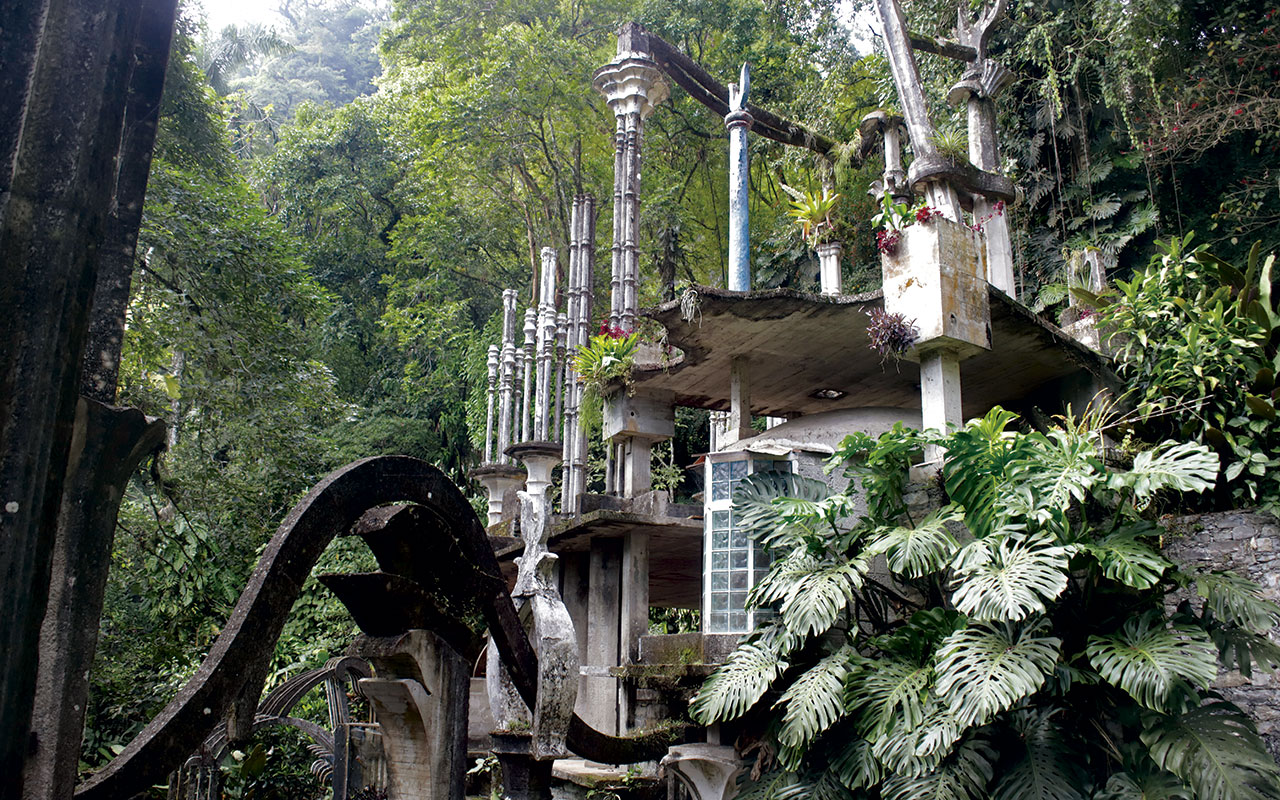
James's response defines the place: he resolved to build flowers that could never die — in concrete. From 1962 until his death in 1984, crews of local masons, carpenters and blacksmiths — more than 150 workers over the project's life, with carpenter José Aguilar carving the wooden molds — poured a fantasy of columns shaped like bamboo and orchids, gates, aqueducts, spiral stairs and towers among the waterfalls.
The price of a dream: construction cost over US$5 million, which James raised largely by auctioning off his surrealist art collection — the Dalís and Magrittes traded, in effect, for concrete in the jungle. He called one tower "the Tower of Hope" and meant to live in it. He never finished it; when he died in 1984, construction stopped mid-pour, and several structures remain frozen exactly where the workers left them.
The guided circuit (~1.5 hours, groups of max 25) winds uphill past the essentials. Names matter here — James titled his follies like poems:
The signature structure — restored in 2012–2013 with help from the World Monuments Fund after decades of jungle humidity.
A 20-meter spiral of orchid-form columns that climbs into open air and simply… ends. The most photographed spot in the garden.
On one of the highest points with the best views — the home James intended for himself and never occupied.
…and Don Eduardo's Cabin, the wood-and-bamboo hut where James actually lived among his pet snakes, restored by the World Monuments Fund.
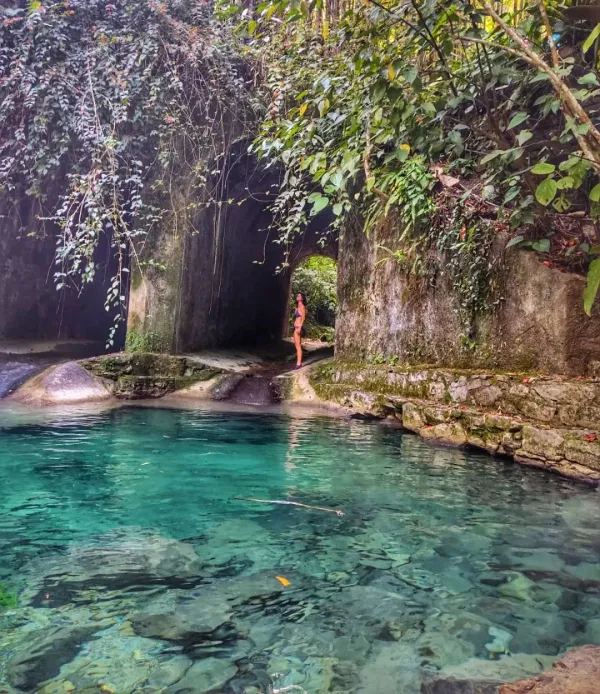
Below it all run the pozas themselves — the nine stepped waterfall pools that gave the place its name. You can photograph them from the paths, but swimming is no longer permitted.
When James died in 1984, the land passed to Plutarco Gastélum, who halted all construction. The garden opened informally to visitors in the early 1990s. In 2007 the Fundación Pedro y Elena Hernández, CEMEX and the San Luis Potosí state government bought the site for about US$2.2 million and created Fondo Xilitla, the trust that manages it today.
The honors piled up: State Cultural Heritage (2006), Mexico's UNESCO World Heritage Tentative List (2009), the World Monuments Fund Watch (2010) and Artistic Monument of the Nation (2012) — a designation rarely granted to 20th-century sites. Conservation is a permanent battle (concrete + jungle humidity + roots), which is exactly why the garden closes every Tuesday. Well over 100,000 people visit each year.
Phones and handheld cameras are fine for personal use. No tripods, lighting rigs or pro kits, and drones are prohibited without a special production permit. Best light: right at the 9 AM opening, when mist still hangs in the canopy and the tour buses haven't arrived.
The garden is a hillside of stairs and mossy, slippery concrete — officially not recommended for people with mobility or heart conditions; strollers are banned. Wear grippy shoes. Give it a full morning even though the tour is ~1.5 h.
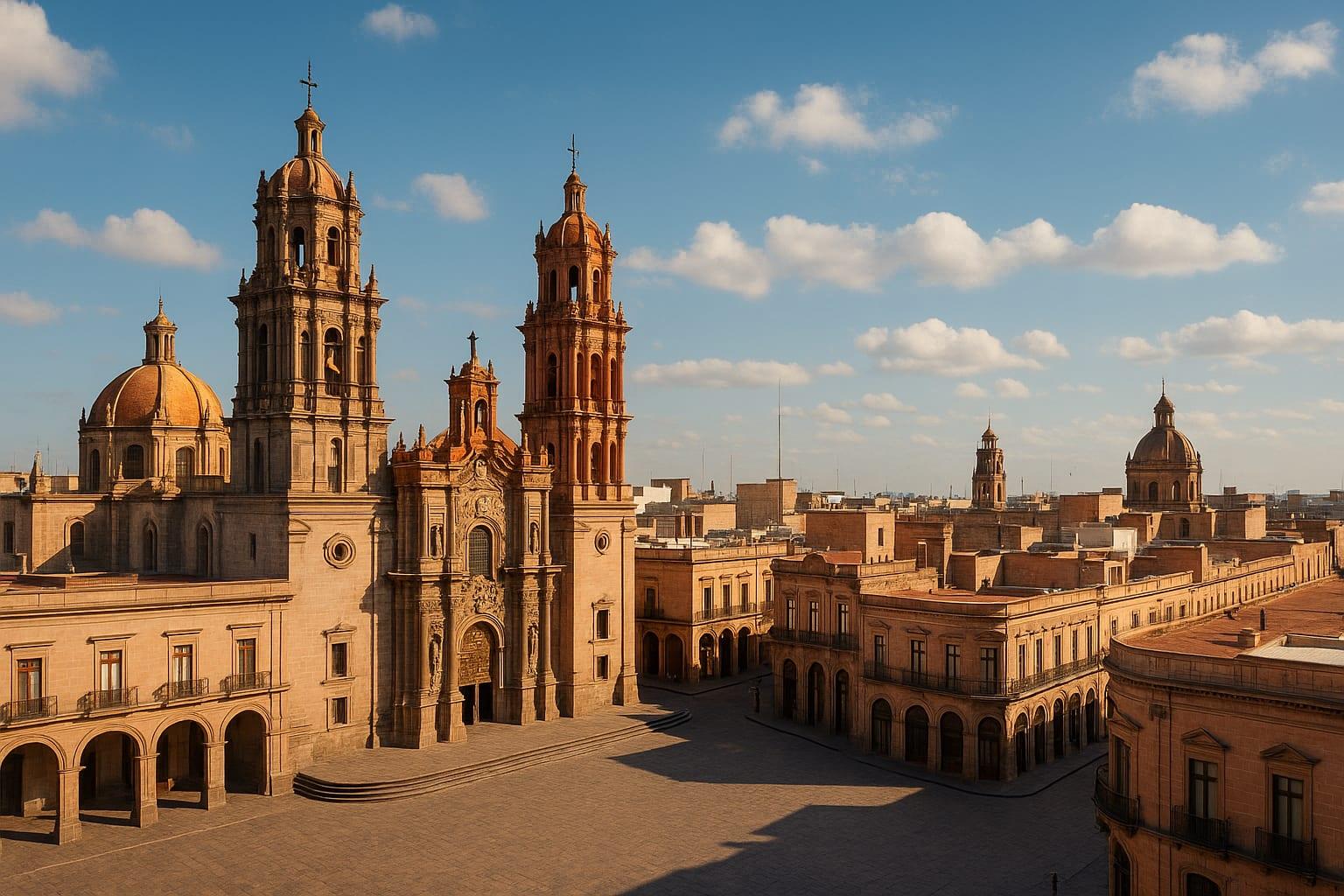
Most visitors treat Xilitla as a parking lot for Las Pozas. Give the town an afternoon and it repays you — a hillside Pueblo Mágico (since 2011) of coffee, fog and layered history, home to living Nahua and Teenek (Huastec) communities:
Construction of this fortress-monastery began in 1553, and it's often cited as the oldest standing building in the state. It was literally built for war — Chichimeca raids burned its roof in the 1580s — and its plateresque bulk still dominates the plaza.
Opened in 2018 with sculptures, drawings, tapestries and masks donated by the artist's son. The circle closes here: Carrington was Edward James's friend, and he championed her work decades before the world caught up. (Her larger museum is in San Luis Potosí city.)
Over 2,500 mm of rain a year makes Xilitla one of the wettest — and best coffee — corners of Mexico. Try locally grown cups around the plaza; there's a coffee fair every August. Sunday is market day, when the tianguis fills the center with Huasteca food and crafts.
Plutarco Gastélum's gothic-fantasy house in town, where James lived for long stretches. Today it's both a small museum and the Posada El Castillo (~MX$1,550–2,500/night) — sleeping in Edward James's house is the single best flex in the Huasteca.
A ~480 m collapse pit near Aquismón where hundreds of thousands of swifts and green parakeets spiral out at dawn and dive back at dusk (~5:30–6:30 PM). Entry MX$30 plus a ~30–40 min stone-path hike — the quieter alternative to the famous Sótano de las Golondrinas.
A huge cave mouth just outside town (small cash fee, ~MX$25–50), reached by an easy ~3-mile round-trip trail. Bring a headlamp — and a guide if you want to go deep.
Building a longer trip? Xilitla is Day 3 of our Huasteca Potosina 3/5/7-day itinerary, which covers Tamul, the waterfalls and all 2026 prices.
From Ciudad Valles: 85 km, ~1 h 20 (Hwy 85 south, then Hwy 120 up the mountain). From San Luis Potosí city: ~4.5–5 h total. Don't drive the sierra at night — fog is routine at this altitude.
Cloud-forest climate, noticeably cooler than the lowland Huasteca. Dec–Mar: crisp, lows to ~8°C, high humidity. Jun–Sep: heavy rain (brief August respite). Jan–Mar offers the most reliable conditions — check a 10-day forecast either way.
Sleep: Posada El Castillo for the history; Hostal Café and simple posadas near the Las Pozas entrance for budget. One night covers the garden + town; two nights add Huahuas at dusk and the Sunday market.
Las Pozas is a surrealist sculpture garden built in the jungle of Xilitla, San Luis Potosí, by British poet and arts patron Edward James — the man who bankrolled Salvador Dalí and was painted by Magritte. Between 1962 and his death in 1984 he poured over US$5 million into roughly three dozen concrete follies (the site officially catalogues 27) spread over 9 hectares of rainforest, waterfalls and pools.
Adults pay MX$180 at the box office (MX$120 seniors and kids 6–12) plus a mandatory guide fee of MX$30 in Spanish or MX$60 in English. You must reserve a timed entry online first — between 24 hours and 60 days ahead — then pay in person on the day. Closed Tuesdays; last entry 4 PM; English tours run at 10 AM and 3 PM.
No — not anymore. Swimming in the pools below the waterfalls used to be allowed, but it has not been permitted since the pandemic era. Older guides still say otherwise; they are out of date. For swimming, head to Puente de Dios or the Tamasopo falls about an hour away.
Xilitla is 85 km (~1 h 20) from Ciudad Valles via highways 85 and 120, and roughly 4.5–5 hours from San Luis Potosí city. Most travelers combine it with a Huasteca Potosina circuit based in Ciudad Valles; day tours also run from there.
A day trip covers Las Pozas plus a quick look at town. One overnight is much better: you catch the garden at the 9 AM opening before the crowds, plus the 16th-century Augustinian ex-convent, the Leonora Carrington museum and coffee shops. Two nights adds the dusk bird spectacle at the Sótano de las Huahuas and the Sunday market.
Edward James (1907–1984) was a British poet and heir who became one of surrealism's great patrons: he contracted to buy Salvador Dalí's entire output for 1938, co-created the Lobster Telephone and Mae West Lips Sofa, and appears in Magritte's famous painting 'Not to Be Reproduced'. He arrived in Xilitla in 1945 with his guide and lifelong friend Plutarco Gastélum, bought a coffee plantation in 1947, and after a 1962 frost killed his orchids, spent two decades building concrete flowers that could never die.
Verified July 2026 against: laspozasxilitla.org.mx (official history, prices, visit rules), Wikipedia entries for Edward James, Las Pozas and Xilitla (biographical dates, Dalí contract, Magritte portraits, construction figures), UNESCO Tentative Lists (ref. 5493), World Monuments Fund project pages (restorations), Museo Leonora Carrington official information, El Universal SLP and Huasteca regional sources (ex-convent history, Sótano de las Huahuas). Where sources disagree — structure counts (official: 27; most media: 36), the butterfly anecdote, "oldest building in the state" — we attribute rather than assert.
Planning your Huasteca trip from San Luis Potosí?
Get our weekly guide to events, food and travel in SLP — free, every Monday.
Subscribe to San Luis Way WeeklyGear and home items our community recommends for life and adventure in SLP.
Trail-ready grip for Real de Catorce, Huasteca Potosina, and Sierra de San Miguelito.
$1,200–2,500 MXN
View on Mercado LibreAffiliate link

Grip wet stone at Media Luna, Puente de Dios, and Huasteca waterfalls without slipping.
$400–800 MXN
View on Mercado LibreAffiliate link

Comfortable rest for camping in the Huasteca or Real de Catorce — folds down to fit in your trunk.
$780–1,400 MXN
View on Mercado LibreAffiliate link
Get practical tips to navigate the city, weekly events, and useful local info delivered to your inbox.
Join our community. No spam, ever.
Free events, new restaurants, updated guides — every week.
Get weekly updates on new places, events, and expat tips delivered to your inbox.
We respect your privacy. Unsubscribe at any time.