Columbia men's hiking trail shoes
Trail-ready grip for Real de Catorce, Huasteca Potosina, and Sierra de San Miguelito.
$1,200–2,500 MXN
View on Mercado LibreAffiliate link


Quick Answer
Real de Catorce sits at 2,730 m, about 220 km north of San Luis Potosí city, and you reach it by driving 25 km of cobblestone and the one-lane 2.3 km Ogarrio Tunnel. In October 2026, Fiesta de San Francisco marks St. Francis's 800th anniversary, so expect record crowds.
In this guide
Facts verified July 2026 · Sources at the end · Pairs with our weekend getaways from SLP
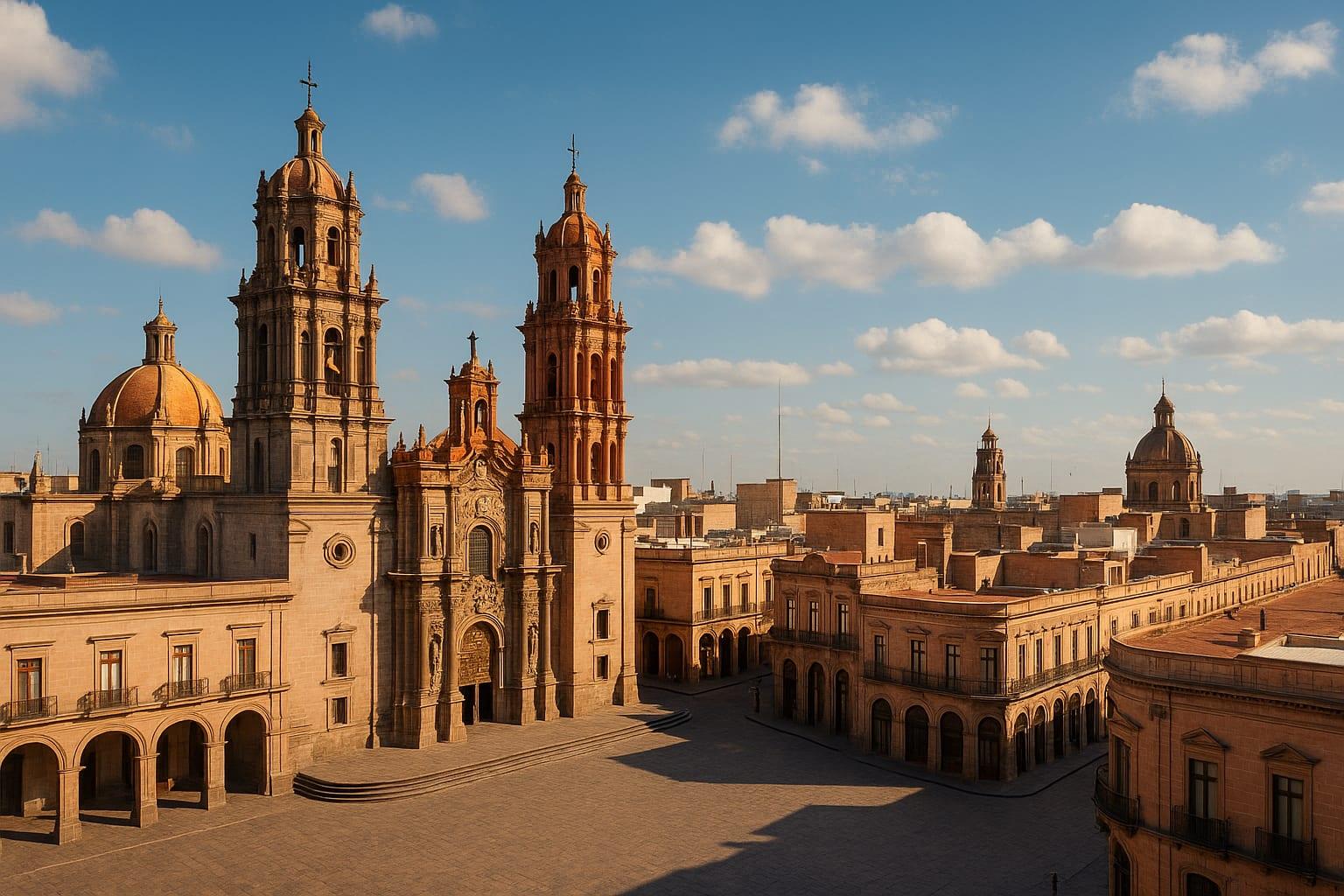
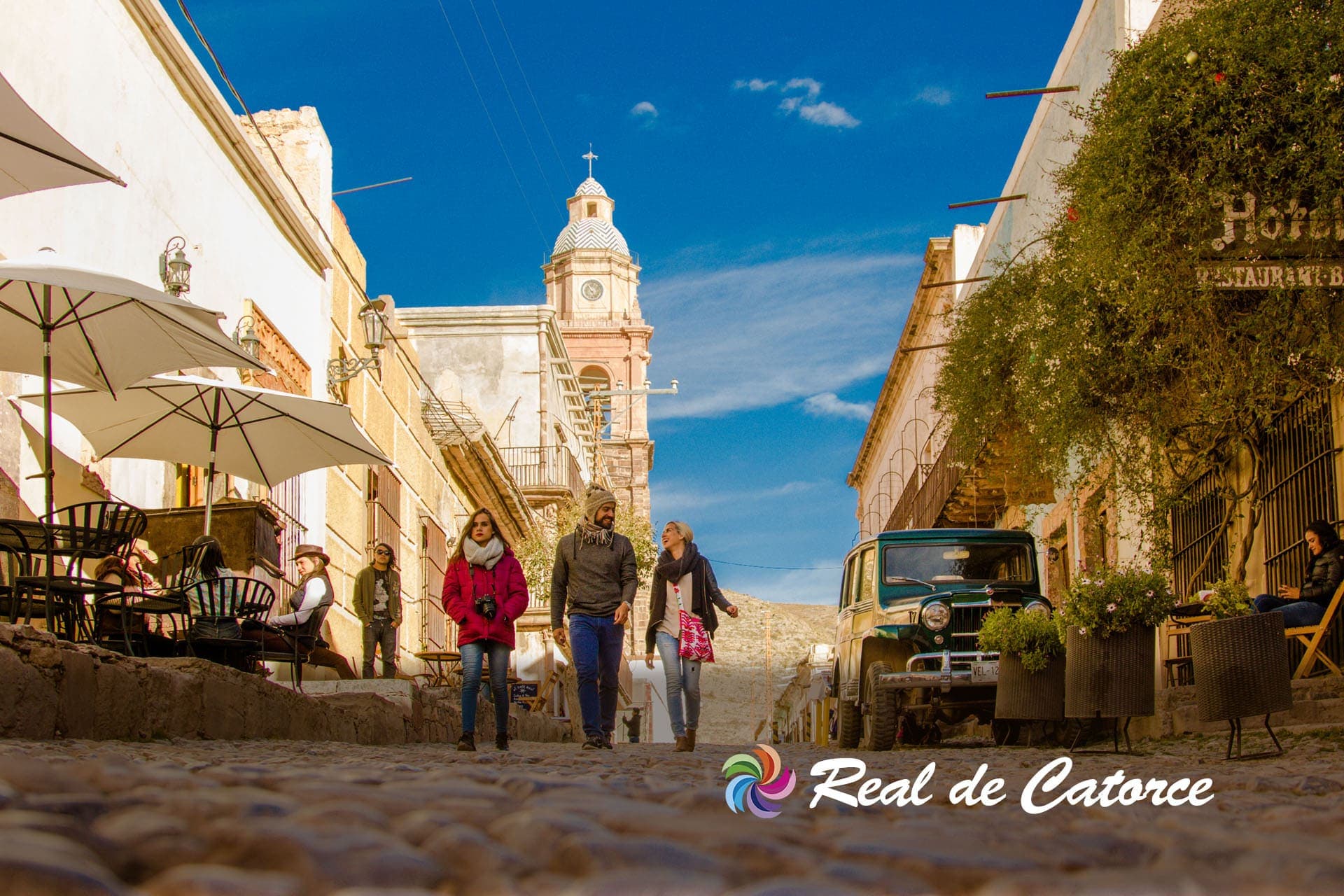
To reach Real de Catorce you drive 25 km of cobblestone up a desert mountain, then pass through a 2.3-kilometer mining tunnel barely wide enough for your car. On the other side: a half-abandoned silver town at 2,730 meters where Brad Pitt filmed a movie, pilgrims arrive by the tens of thousands each October, and the surrounding desert is UNESCO-recognized sacred ground. This is the complete 2026 guide.
Real de Catorce is a former silver boomtown in the Sierra de Catorce, ~220 km north of San Luis Potosí city, at about 2,730 m (9,000 ft). Once home to some 15,000 people and its own mint, it nearly emptied after silver collapsed around 1900 — and was reborn as one of Mexico's first Pueblos Mágicos (2001).
Silver was struck in these mountains in the early 1770s, and the town was formally constituted around 1779–1780. Then came the frenzy: in 1782, forty-eight mines were registered in less than a month. By the late 19th century Real de Catorce held some of Mexico's richest silver mines, its own Casa de Moneda (which coined silver reales for roughly three years in the 1860s before Emperor Maximilian ordered it shut in 1866), and around 15,000 residents — local lore inflates that to 40,000. Mexico's first dynamite blast was set off here, at the La Purísima mine, in 1873.
And the name? Nobody actually knows. The two competing legends — fourteen Spanish soldiers ambushed by Chichimeca warriors, or fourteen bandits who robbed silver convoys — are both just that: legends. The only documented anchor is a seam discovered in 1773 at a site already called "Los Catorce."
When silver prices collapsed after 1900, the town emptied within a generation. The 2010 census counted 1,392 people among mansions, mine works and a cockfighting arena built for a city ten times the size — the "ghost town" texture that makes it unforgettable today.
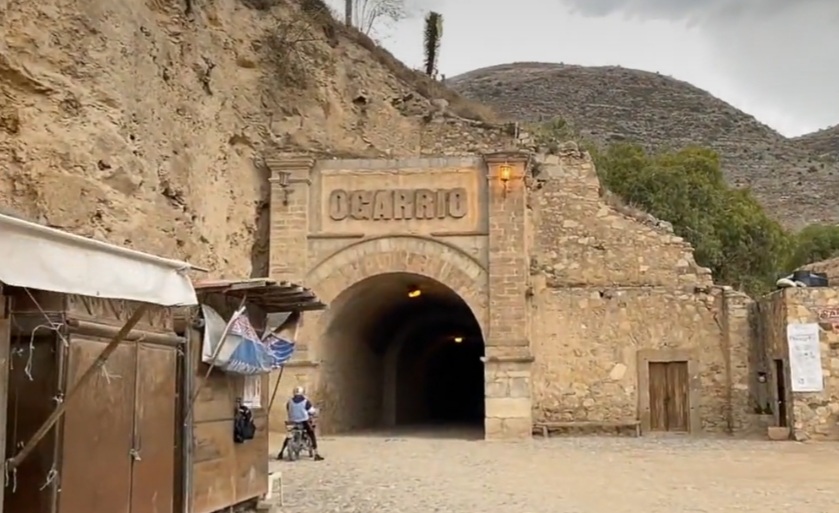
Two crews digging from opposite sides of the mountain met in the middle in 1901, after four years of work — and gave the town the strangest front door in Mexico. The Túnel de Ogarrio (named for engineer Vicente Irizar's hometown in Spain) runs about 2.3 km through the rock, fits a single lane, and is managed the old way: staff with radios at each end alternate the direction of traffic.
The state has announced plans to make the tunnel entry-only with a new exit road on the far side — but as of mid-2026 the alternate route remains pending, so expect the classic alternating system.
Built between the 1790s and 1817, with a rare floor of broad pine planks. It houses the miracle-credited image of St. Francis of Assisi — Panchito — whom devotees swear walks the hills at night, wearing out his sandals. The walls of ex-votos, many painted on metal sheet by 19th-century miners giving thanks for surviving cave-ins, are reason enough to come.
The 1860s mint, today the town's cultural center (museum entry ~MX$20). A mint this far up a mule track tells you everything about how much silver came out of these mountains.
A 19th-century stone cockfighting arena — Rome-in-miniature — and the tree-lined main square where the willys drivers wait.
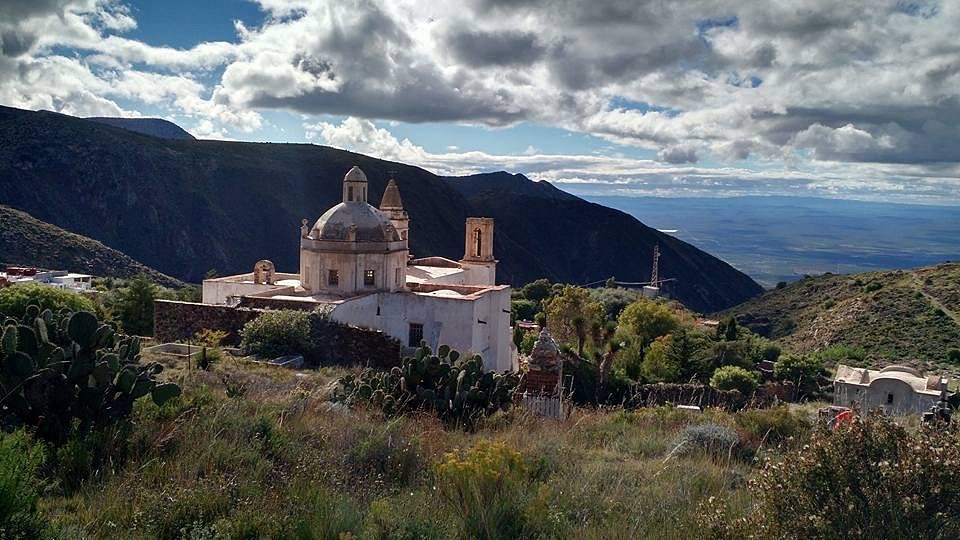
The panteón dates to 1775 and surrounds an 18th-century chapel that predates the parish church — the oldest corner of town, and its most photogenic at golden hour.
Vintage WWII-style Willys jeeps — once pilgrim transport from the rail station below — now run from Plaza Hidalgo: shared rides down to Estación Catorce and the desert (~MX$50/person collective; ~MX$250/person for 3–4 h shared tours; private jeeps MX$500–1,500 by route). Confirm prices on the plaza.
Local guides run rides to the Pueblo Fantasma mine ruins (~MX$250, ~100 min) and to Cerro del Quemado (~MX$300, ~3 h) — prices from published 2023 guides; expect somewhat more in 2026.
The Pueblo Fantasma — ruined mine works and processing haciendas scattered up the sierra, including the Socavón de la Purísima — is the picture that sells the town: roofless stone walls against 100-km desert views. Go early for the light; wear real shoes.
The desert below town is not scenery. It is Wirikuta — the sacred territory where, in Wixárika (Huichol) cosmology, the world was created and the Sun was born. Each year Wixárika pilgrims walk hundreds of kilometers to Cerro del Quemado, the mountain above Real de Catorce, at the climax of a route that in July 2025 was inscribed on the UNESCO World Heritage List — the first living Indigenous tradition in Latin America to receive that recognition.
For anyone who is not a member of a recognized Indigenous people, peyote is illegal to pick, possess, transport or consume in Mexico (General Health Law art. 245; Federal Penal Code arts. 194–195, with penalties of 5–20 years). It is also environmentally protected (NOM-059): the cactus takes decades to mature and is being wiped out by extraction — wildlife fines run to millions of pesos. "Peyote tourism" damages a slow-growing plant, a living culture, and potentially your future. Experience the desert's silence instead; it's the real thing.
Context worth knowing: mining concessions still cover much of the Wirikuta reserve, and the Wixárika have fought them for years — the UNESCO listing strengthens that defense.
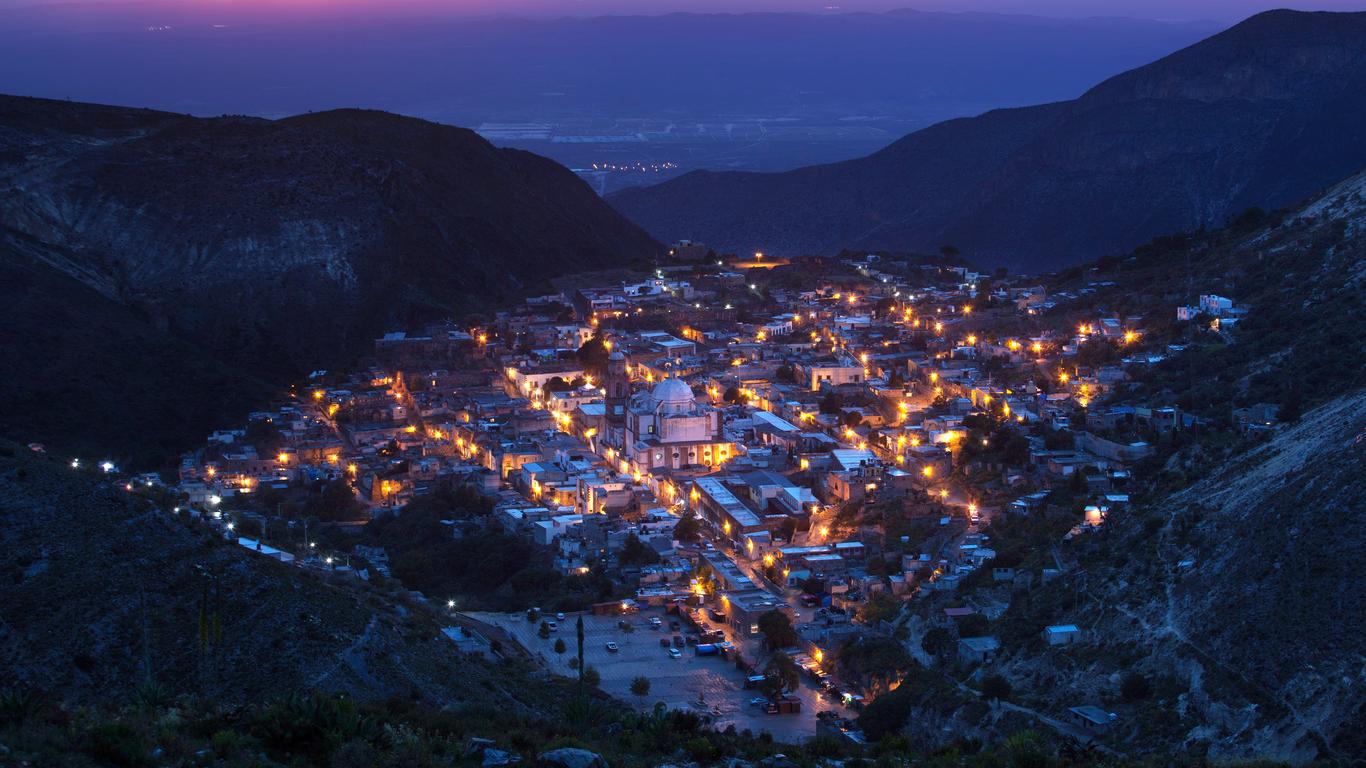
~220 km: Hwy 57 north to Matehuala (~2 h), west via Cedral, then ~25 km of cobblestone climbing to the tunnel. Budget 4 hours in practice — the cobblestone is slow. By bus: SLP → Matehuala, then combis from Altamirano 104 (~8 AM, 2 PM, 5 PM; ~MX$121).
High-desert: sunny days (21°C in January, ~30°C in May) and cold nights all year (0–10°C). Jacket always. Best months: October–April.
| Hotel | Style | From (MXN/night) |
|---|---|---|
| Mesón de la Abundancia | Boutique in an 1863 stone building; the town's classic | ~$1,450–1,900 |
| Villas Alcazaba | Rustic hillside cabins | ~$1,800 |
| Mesón del Refugio | By the parish church | ~$950–1,500 |
| Hotel El Real | 28 rooms, dependable mid-range | ~$1,100 |
Published 2023–2026 figures — confirm when booking; weekends and holidays sell out early.
Eating: Mesón de la Abundancia's restaurant and La Porfiriana (mains ~MX$250), La Migaja for Mexican-Italian (~MX$200), street gorditas everywhere — plus a curious cluster of Italian restaurants, a legacy locals trace to the Italian film crews and expats of the 1990s.
From the third week of September to about October 12 — peaking on October 4 — tens of thousands of pilgrims pour through the tunnel to touch Panchito's glass case. Recent editions projected up to 80,000 visitors across the season; hotels run past 90% and the tunnel switches to park-outside-and-shuttle mode.
2026 is the 800th anniversary of the death of St. Francis of Assisi (d. October 3, 1226), and Real de Catorce expects amplified religious tourism all season. The municipality has even announced a monumental pink-stone statue of the saint — though as of mid-2026 it remains announced rather than built. If you want the spectacle, book months ahead; if you want the ghost town, come any other month.
The town's ruined-grandeur look has a filmography: The Mexican (2001) put Brad Pitt and Julia Roberts on these streets (and through the Ogarrio Tunnel), Bandidas (2006) brought Salma Hayek and Penélope Cruz, and the Italian film Puerto Escondido (1992) is often credited with starting the town's Italian love affair. Even alt-J shot a music video here ("3WW", 2017).
Yes — it's one of Mexico's most atmospheric destinations: a semi-abandoned silver town at ~2,730 m in the Sierra de Catorce, entered through a 2.3 km one-lane mining tunnel. Count on one full day minimum; an overnight lets you catch the ghost-town ruins at sunrise and the high-desert stars. It pairs naturally with a San Luis Potosí city trip (220 km away).
Drive Highway 57 north to Matehuala (about 2 hours), head west through Cedral, then climb roughly 25 km of cobblestone road to the Ogarrio Tunnel — about 4 hours total in practice. By public transport: bus to Matehuala, then combis to the town from Altamirano 104 (departures around 8 AM, 2 PM and 5 PM).
There is exactly one ATM, inside the municipal building, and it is famously unreliable. Treat the town as cash-only: bring all the pesos you need for lodging, food, the tunnel toll and willys rides from Matehuala or San Luis Potosí.
The Ogarrio Tunnel is a 2.3 km (1.5-mile) former mining tunnel — dug 1897–1901 — and the town's main entrance. It fits one lane of traffic, so staff with radios alternate the direction. Expect a small toll (roughly MX$30–60 per vehicle plus a per-person fee, cash). During the October fiesta and Semana Santa, cars park outside at Dolores Trompeta and shuttles take you through.
October to April brings cool, sunny high-desert days — but nights drop near freezing year-round, so always pack a jacket. Avoid (or embrace) the Fiesta de San Francisco from late September to October 12: tens of thousands of pilgrims arrive, hotels sell out, and in 2026 — the 800th anniversary of St. Francis of Assisi — crowds are expected to break records.
No. For anyone who is not a member of a recognized Indigenous people, picking, possessing, transporting or consuming peyote is a federal crime in Mexico (penalties run 5–20 years), and the cactus is also environmentally protected under NOM-059 — it grows painfully slowly and is threatened by extraction. The desert around town, Wirikuta, is sacred Wixárika territory whose pilgrimage route was inscribed by UNESCO in 2025. Enjoy the landscape; leave the peyote alone.
Verified July 2026 against: INAH (founding chronology, mint, first dynamite use), realdecatorce.info (tunnel construction, parish church, Casa de Moneda), UNESCO World Heritage Centre (Wixárika Route inscription, ref. 1704), Mexico's General Health Law art. 245 and Federal Penal Code arts. 194–195 plus NOM-059-SEMARNAT (peyote legal/conservation status), El Universal SLP (fiesta crowds, tunnel protocol, willys and horseback prices), Wikivoyage 2026 edits (hotels, tunnel toll, combi schedules), El Sol de San Luis and Potosinoticias (2026 tourism agenda, statue announcement, road works), Wikipedia/IMDb (film locations). Where sources conflict — peak population, tunnel toll, the town's name — we present ranges or label legends as legends.
Planning more escapes from San Luis Potosí?
See our weekend getaways guide and the Huasteca Potosina itinerary — or get the weekly agenda free.
Subscribe to San Luis Way WeeklyGear and home items our community recommends for life and adventure in SLP.
Trail-ready grip for Real de Catorce, Huasteca Potosina, and Sierra de San Miguelito.
$1,200–2,500 MXN
View on Mercado LibreAffiliate link

Rechargeable, 500 lumens, water-resistant. Essential for camping Real de Catorce or night treks.
$1,200–2,000 MXN
View on Mercado LibreAffiliate link

Comfortable rest for camping in the Huasteca or Real de Catorce — folds down to fit in your trunk.
$780–1,400 MXN
View on Mercado LibreAffiliate link
Get practical tips to navigate the city, weekly events, and useful local info delivered to your inbox.
Join our community. No spam, ever.
Free events, new restaurants, updated guides — every week.
Get weekly updates on new places, events, and expat tips delivered to your inbox.
We respect your privacy. Unsubscribe at any time.