

How surrealism found a home in San Luis Potosí

Quick Answer
The Leonora Carrington Museum in San Luis Potosí—opened March 22, 2018—is the world’s first museum devoted entirely to Leonora Carrington. It offers free admission Tuesday-Sunday, 10 AM-6 PM, on Calle Villerias in the Centro Historico.
📑 In This Article
Estimated reading time: 12 minutes
In the heart of Mexico, where colonial architecture meets avant-garde art, stands an extraordinary tribute to one of the most enigmatic artists of the 20th century. The Leonora Carrington Museum in San Luis Potosí is the world's first museum dedicated entirely to the British-Mexican surrealist painter—a testament to the profound connection between this visionary artist and the magical landscapes of central Mexico.
Leonora Carrington (1917-2011) was no ordinary artist. A rebellious English debutante who fled her aristocratic upbringing to join the Surrealist movement in Paris, she eventually found her true home in Mexico, where she lived for nearly seven decades.
1. Who Was Leonora Carrington?
From English aristocrat to Mexican surrealist legend

Mary Leonora Carrington was born on April 6, 1917, in Clayton-le-Woods, Lancashire, England, to a wealthy textile industry family. From a very early age, she rebelled against the expectations of her aristocratic upbringing—she was expelled from at least two convent schools before being sent to a boarding school in Florence.
Early Influences
Carrington's Irish mother and her nanny introduced her to Celtic mythology and Irish folklore—imagery that would later appear throughout her art.
— Source: Tate Gallery Biography
Finding Home in Mexico
Through a marriage of convenience to Mexican diplomat Renato Leduc, Carrington secured passage to New York in 1941. By 1942, she had divorced Leduc and permanently settled in Mexico City, where she would live for the rest of her life—nearly seven decades.
94
years of an extraordinary life
Leonora Carrington lived from 1917 to 2011, creating art until the end
"I didn't have time to be anyone's muse... I was too busy rebelling against my family and learning to be an artist."
2. Her Connection to San Luis Potosí
Mystical landscapes that inspired surrealist masterpieces
Why San Luis Potosí? While Carrington lived primarily in Mexico City, she developed a special connection to San Luis Potosí through her visits to its magical towns—Real de Catorce and Cerro de San Pedro.
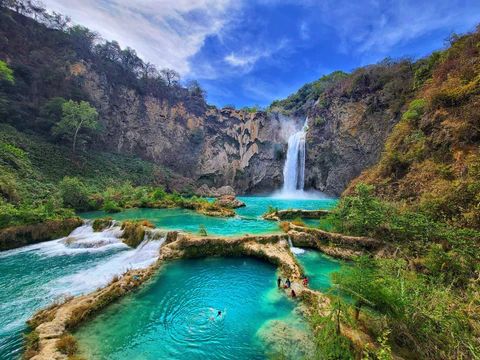
Real de Catorce: The Ghost Town That Inspired
Real de Catorce, the former silver mining town perched in the mountains of San Luis Potosí, particularly captivated Carrington. This "ghost town," accessible only through a 2.3-kilometer tunnel carved through the mountain, offered the perfect surrealist landscape.
Real de Catorce
- Former mining city at 2,750m altitude
- Accessible through historic tunnel
- Sacred Huichol pilgrimage site
- Surreal desert landscapes
Cerro de San Pedro
- Site of original gold discovery in 1592
- Historic colonial architecture
- Abandoned mining infrastructure
- 20km from SLP capital
3. The Leonora Carrington Museum
The world's first museum dedicated to the Surrealist master

On March 22, 2018, the Leonora Carrington Museum opened its doors in San Luis Potosí, becoming the world's first museum dedicated entirely to this revolutionary artist. The museum was made possible through generous donations from Pablo Weisz Carrington, the artist's son.
The Collection
Sculptures
Bronze and mixed-media sculptures including "How Doth the Little Crocodile" and other fantastical creatures
Paintings
Surrealist oil paintings featuring mythological beings, alchemical symbols, and dreamlike landscapes
Literary Works
First editions of her novels "The Hearing Trumpet" and "The Stone Door," plus illustrated manuscripts
Visitor Info: The Leonora Carrington Museum is located on Calle Villerias in the Centro Historico. Admission is free. Open Tuesday-Sunday, 10 AM - 6 PM. Guided tours available on weekends.
4. Centro de las Artes: From Prison to Paradise
One of the most striking cultural transformations in Mexico, the Centro de las Artes de San Luis Potosi occupies the former state penitentiary, a massive structure built between 1884 and 1904 during the Porfiriato era. In 2006, the prison was converted into a world-class arts center.
The Leonora Carrington Room
A dedicated exhibition space within the Centro de las Artes houses rotating displays of Carrington's work, connecting her legacy to the building's dramatic architectural past. The contrast between the prison walls and surrealist art creates a powerful experience.
What to See
- ✓ The original prison cells converted into artist studios
- ✓ Contemporary art galleries with rotating exhibitions
- ✓ The spectacular central courtyard and architecture
- ✓ Workshops in ceramics, photography, painting, and printmaking
Visitor Info: Centro de las Artes is on Calzada de Guadalupe 705. Free admission. Open Tuesday-Sunday, 10 AM - 6 PM. The building itself is an architectural masterpiece worth visiting even without exhibitions.
5. Xilitla and Las Pozas: The Surrealist Garden
Deep in the Huasteca Potosina jungle, about 5 hours from San Luis Potosi city, lies one of the most extraordinary surrealist creations on Earth: Las Pozas, the garden of English artist and poet Edward James.
About Las Pozas
Built between 1949 and 1984, Las Pozas spans 80 acres of subtropical rainforest and contains more than 80 surrealist concrete structures — towering columns that support nothing, staircases that lead to the sky, and fantastical forms inspired by the natural world.
80+
Surrealist structures
1949-1984
35 years of construction
80 acres
Of subtropical jungle
Connection to Carrington: Edward James was a close friend and patron of Leonora Carrington. Both shared a passion for surrealism, the mystical, and the natural world. Visiting Las Pozas after the Carrington Museum creates a powerful narrative arc through surrealism in San Luis Potosi.
6. Plan Your Visit
| Location | Hours | Admission | Time Needed |
|---|---|---|---|
| Leonora Carrington Museum | Tue-Sun 10-6 | Free | 1-2 hrs |
| Centro de las Artes | Tue-Sun 10-6 | Free | 1.5-2 hrs |
| Las Pozas (Xilitla) | Daily 9-6 | ~$100 MXN | 2-3 hrs |
Tip: Visit the museum and Centro de las Artes in one day (they are both in the city center). Save Xilitla for a separate overnight trip — the 5-hour drive is worth it, and the Huasteca has many other attractions including waterfalls, caves, and rivers.
Conclusion
Leonora Carrington's legacy in San Luis Potosi transforms the city into one of Mexico's most fascinating cultural destinations. From her intimate museum in the historic center to the dramatic Centro de las Artes and the jungle wonderland of Las Pozas, her surrealist spirit permeates the region.
Whether you are an art lover, a curious traveler, or someone seeking inspiration, the surrealist trail through San Luis Potosi offers an unforgettable experience that connects European surrealism with Mexican magic.
Explore More of San Luis Potosi
Discover more about the art, culture, and history of this incredible city.
Tags
You might also like

Enjoyed this article?
Get practical tips to navigate the city, weekly events, and useful local info delivered to your inbox.
Join our community. No spam, ever.
You might also like
Get the best of SLP in your inbox
Free events, new restaurants, updated guides — every week.
Stay in the Loop
Get weekly updates on new places, events, and expat tips delivered to your inbox.
We respect your privacy. Unsubscribe at any time.